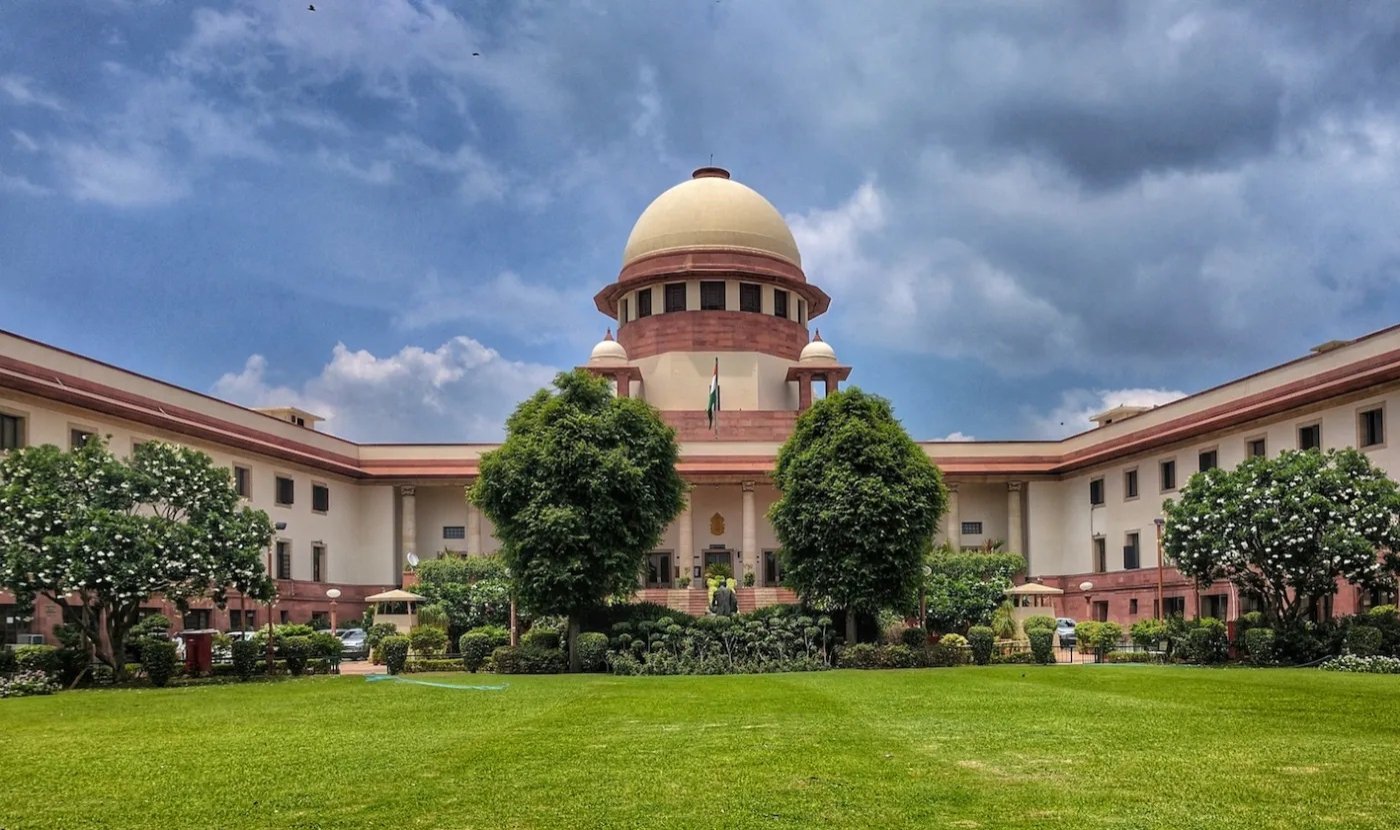
New Delhi: A number of petitions contesting the Election Commission of India’s June 24 order for a Special Intensive Revision (SIR) of the Bihar electoral records are being heard by the Supreme Court.
The case is being heard by a bench of Justices Joymalya Bagchi and Surya Kant.
The petitioners have expressed worry that the SIR process allows for the arbitrary removal of voters without sufficient protection, which could deprive thousands of people of their right to vote and jeopardize free and fair elections.
The Election Commission has justified its order, claiming that Section 21(3) of the Representation of the People Act, 1950 and Article 324 of the Constitution provide it the authority to carry out such an exercise.
Urban migration, demographic changes, and long-standing doubts about the authenticity of the current rolls—which had not undergone a significant adjustment in almost two decades—have all been cited as reasons for the revision.
In addition, the Commission has argued that the SIR is essential to guaranteeing that, before to the next Bihar Assembly elections, only qualified individuals are listed on the electoral records.
The list of documents that the Election Commission may accept to confirm voters’ identities and keep their names on the electoral list is one of the matters the Court is deliberating.
The Election Commission was urged by the top court on July 10 to accept Aadhaar, ration cards, and electoral picture identification cards (EPIC cards) as valid forms of identification for this verification process.
However, the Commission subsequently filed an affidavit asserting that ration cards and Aadhaar cards are not acceptable forms of identification for voting eligibility.
The exclusion of these materials has been contested by the petitioners as being ridiculous.
Opposition figures from a number of states and groups including the National Federation for Indian Women, the People’s Union for Civil Liberties, and the Association for Democratic Reforms (ADR) are among the petitioners.
More recently, as part of the SIR, the ADR filed an interim plea asking the Court to order the ECI to reveal information about 65 lakh names that were recently removed from an August 1 Bihar electoral roll.
In response, the ECI said that it was not required by law to provide such justifications for publishing a separate list of people who were not allowed to vote.
However, it also stated that no name will be removed off Bihar’s draft electoral roll without being given advance notice, a chance to be heard, and a well-reasoned directive from the appropriate authorities.
The Court noted orally at yesterday’s hearing that the ECI has jurisdiction over the inclusion and exclusion of citizens and non-citizens from the electoral rolls. Additionally, it stated that ECI was correct to say that an Aadhaar card is not a definitive document proving citizenship.