Kullu: While the nation threw a lavish celebration of Diwali on Monday, October 20, the people of a remote region of Himachal Pradesh will have to wait another month to enjoy their own Festival of Lights.
This is because residents of some areas of the hilly districts of Kullu, Mandi, Shimla, and Sirmaur have adhered to their own centuries-old custom of Budhi Diwali, also known as “Budhi Dayawadi” (dayawadi meaning struggle), which was not connected by metalled roads until recently.
Budhi Diwali falls on the new moon day of the month of Margashira, but the rest of India celebrates Diwali on the day of the Krishna Paksha (waning moon phase) in the month of Kartik. Additionally, Budhi Diwali adheres to the original spirit of Diwali, in contrast to the Diwali that everyone is accustomed to. Big wooden candles are all around the towns, and there is dancing and celebration all night long instead of loud, colorful, or polluting crackers.
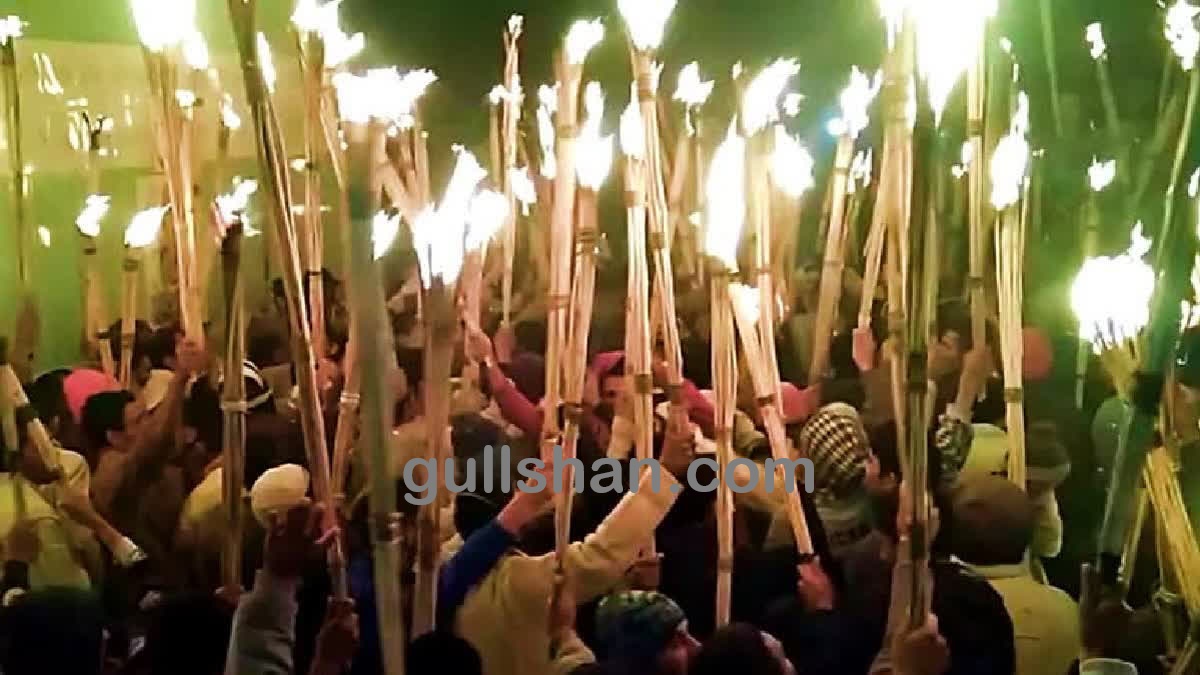
Local resident Shiv Ram Sharma stated, “We celebrate this centuries-old custom of Budhi Diwali with great fervor, burning torches and dancing in circles around the hamlet at midnight in prayer for food, wealth, and regional prosperity. After that, we go to the village temple to watch folk dances. We’re planning a three-day fair this time as well.”
Local specialties are prepared and served to visitors during this three-day celebration, which is a period of culinary excess like all other festivals.
A Story of Origin (Or Three)
The origins of Budhi Diwali are the subject of numerous stories. Surat Thakur, a writer from Kullu, clarified, “One narrative is about the fight between the demons Vritrasura and Indra. A thunderbolt made from the bones of the sage Dadhichi, who had given them to Indra specifically to destroy Vritrasura, was wielded by the ruler of Gods. This triumph of good over evil is celebrated on Budhi Diwali.
He did say, “It is also said that Budhi Diwali marks the late arrival of the news of Lord Ram’s victory over Lanka and return to Ayodhya.”
The rural regions of Karsog in Mandi district, as well as the Ani and Nirmand subdivisions in Kullu district, celebrate Budhi Diwali. The villages of Mahog, Khanyol, Kandi, Kaujoun, and others in the Chawasi region, which spans Karsog and Kangra, are peppered with temples devoted to Lord Shiva, such as the Karsog temples of Mamleshwar Mahadev and Dev Thanali. Here, residents dance about the village at night to the rhythm of drums and ignite cedar and pine wood torches.
Mythology states that Lord Parashurama established Nirmand Hill in Kullu, which the locals refer to as Kashi. It is reported that a demon dressed as a serpent attacked the Lord and his followers while they were traveling. Locals were relieved when Lord Parashurama used his axe to destroy it, and they celebrated the demon’s death as Budhi Diwali. That is the relationship to the Mahabharata.
But Hold on, There’s Still More
“There is a nightlong celebration with torches, dancing, and singing to the accompaniment of drums during Budhi Diwali,” explained Ravi Sharma, a retired schoolteacher who resides in Nirmand hamlet of Kullu. The people reenact the conflict between the armies of Vritrasura and Indra, with both sides vying for a single burning torch, in addition to tales from the Ramayana, Mahabharata, and the legend of King Bali.
“Songs sung in the local dialect accompanied the mythological performances that continued late into the night during the three to seven-day fairs,” he continued. At the village fairs, a range of regional cuisine is prepared and folk dances are performed.
King Bali as well?
Diwali is claimed to have been celebrated in mountainous areas even before the Ramayana mythology. It was then linked to King Bali, a legendary monster who was renowned for being both powerful and giving. According to tradition, King Bali was asked to grant Lord Vishnu land equal to three of his steps so that he may construct the universe in the form of Vamana.
With his first two steps, he proceeded to measure the entire cosmos. The demon king offered King Bali his head when the Lord asked where he might put his third foot. At that point, Diwali started to be observed in several places between Kullu and Shimla after Lord Vishnu gave King Bali the authority to live in the underworld.